"Y Que Fue?" is one of those songs millions of people can hum before they know a single word of it. It arrives through a football edit, a celebration clip or a TikTok transition, the hook lands, and the next search is always the same: what does "y que fue" actually mean?
What does "Y Que Fue?" mean in English?
Literally, "y qué fue" translates as "and what was it?" — but nobody in the Dominican Republic uses it that way. In Dominican Spanish it is a greeting and a challenge at the same time, closest in English to "so what's up?", "what happened?" or, said with an edge, "so what now?" Tone decides everything: among friends it is a warm hello, and thrown at a rival it means "go on then — what have you got?"
That double meaning is exactly why the phrase travels so well. A footballer who has just scored is saying both things at once.
Why the phrase is Dominican, not generic Spanish
Dominican Spanish clips endings, drops consonants and turns questions into rhythm. "Y qué fue" spoken at speed sounds like a single percussive word, which is part of why it works over a dembow beat. Learners of textbook Spanish often hear it and reach for a dictionary, because the literal reading and the street reading barely overlap.
Similar everyday Dominican greetings sit in the same family: "¿qué lo que?" (what's up), "dímelo" (talk to me), "tato" (all good). "Y qué fue" belongs to that register — informal, confident, spoken between people who know each other.
What the song is about, section by section
The following is a paraphrase of the record's ideas rather than a reproduction of its lyrics.
The opening. Don Miguelo sets the scene as a confrontation with someone who has been talking. The greeting doubles as a warning: he is present, he is aware, and he is asking the other person to explain themselves.
The hook. The repeated question is the whole point. It is not looking for an answer; it works like a taunt dropped after the fact, the verbal equivalent of shrugging at someone who doubted you.
The verses. Between the hooks he leans on braggadocio common to dembow: success, loyalty, telling the difference between people who supported him early and people who arrived once things worked out. The register stays playful rather than aggressive.
The outro. The track resolves by circling back to the same phrase, which is why edits can cut in almost anywhere and still land on the recognisable line.
Why football edits adopted it
Dembow's tempo maps almost perfectly onto a goal celebration: the beat is fast, the percussion is dry, and the hook arrives in under two seconds — the entire window a short-form video has to hold a viewer. Add the meaning, and the fit becomes obvious. "So what now?" is what a celebration says without words.
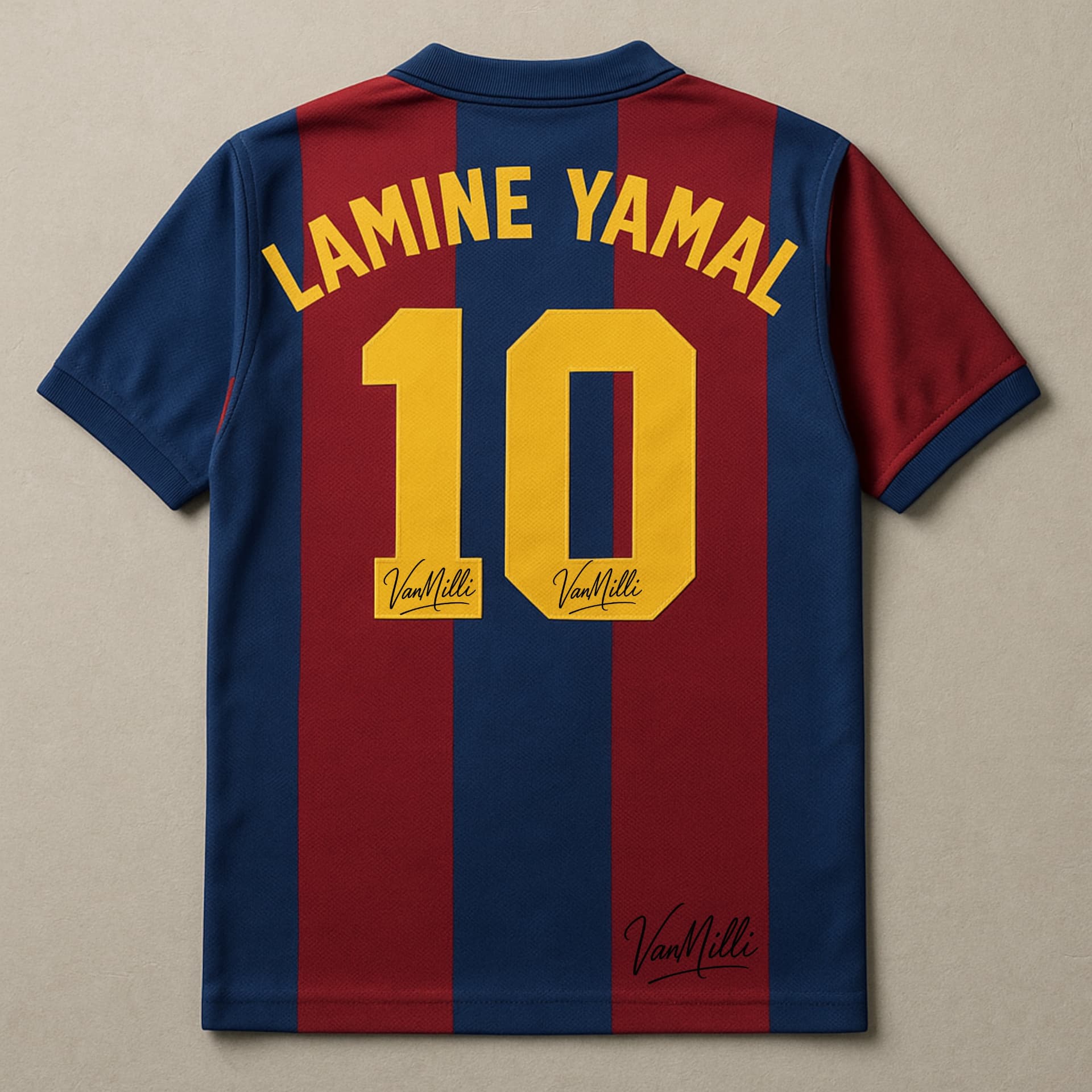
That is how the song reached audiences who do not speak Spanish. Fans of Lamine Yamal, Vinícius Júnior and Endrick meet the record under highlight reels rather than on radio, then look up the phrase afterwards.
Who is Don Miguelo?
Don Miguelo is a Dominican artist who has worked across dembow, reggaetón and Latin urban music for well over a decade, known for hooks built on everyday Dominican speech. "Y Que Fue?" is the clearest example of that method: a phrase people already say, turned into a chorus.
Common misspellings and variants
Search traffic for the track splits across "y que fue", "y qué fue", "ke fue", "y k fue" and "que fue meaning". They all point at the same phrase; the accented "qué" is the grammatically correct written form, while the shortened spellings mirror how it is typed in chats.
Listen to the full playlist