Last updated:
If you have watched a football edit in the last three years, you have heard dembow. It is the rhythm under the slow-motion dribble, the dressing-room dance, the goal compilation with 40 million views. Most viewers could hum it without ever knowing its name.
This is where it comes from and why it won.
The rhythm, in one paragraph
Dembow is built on a syncopated drum pattern — kick, snare, and a rolling percussive figure that lands slightly off the expected beat. The pattern repeats with very little variation, and that repetition is the point: it creates a groove a dancer can lock into within two bars.
Modern Dominican dembow typically runs fast, well above the tempo most listeners associate with reggaeton, and strips the arrangement to drums, bass, a vocal chant and a handful of stabs.
From Kingston to Santo Domingo
The lineage starts in Jamaican dancehall. The riddims that circulated in the late 1980s and early 1990s travelled through Panama and Puerto Rico, where Spanish-language artists began writing over them, and landed in the Dominican Republic where producers rebuilt the pattern faster and harder.
By the 2000s, Dominican dembow had become its own scene: local producers, local slang, local dance styles, and a distribution network that ran on mixtapes, colmado speakers and eventually YouTube. It was a domestic phenomenon long before international audiences noticed.
The Dominican explosion
Through the 2010s, artists including Don Miguelo helped push the sound beyond the island. Streaming flattened the geography — a record made for Santo Domingo could reach Madrid, Barcelona or Milan without a label campaign behind it.
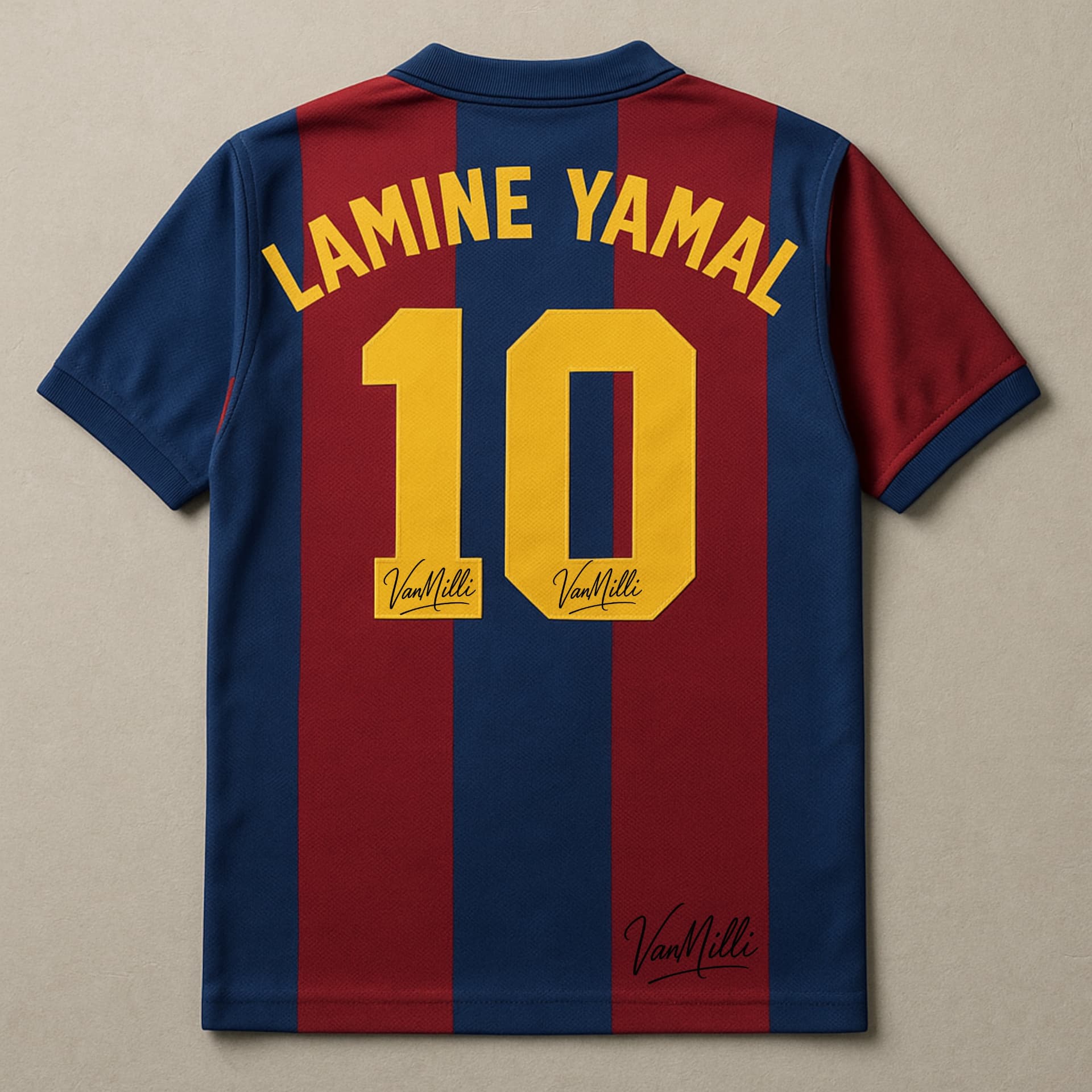
Don Miguelo is a useful case study. "Y Que Fue?" arrived as a single in 2020 and later appeared on his 2024 project EMDP (The Last Album). Its biggest cultural moment came years after release, when it soundtracked Lamine Yamal's entrance at Spain's 2026 World Cup celebration in Madrid.
Why football adopted it
Three technical reasons. First, the loops are short — a recognisable hook fits inside a fifteen-second clip with room for the highlight. Second, the rhythm survives manipulation: speed it up, slow it down, cut it mid-bar and it still reads as itself. Third, the energy sits between celebration and aggression, which is exactly the emotional register of a goal.
There is a cultural reason too. Football dressing rooms in Europe are Latin, Caribbean and African in a way the broadcast product rarely reflects. Dembow is already the music of a large share of the squad before a single edit gets made.
Dembow vs reggaeton
The confusion is understandable — the two share a family tree. The practical distinction is tempo and texture. Reggaeton has grown melodic, spacious and increasingly pop-facing. Dembow stayed fast, dry and percussive, and its vocals lean on chants and call-and-response rather than sung hooks.
Put a reggaeton record and a dembow record next to each other in a warm-up playlist and you feel it immediately: one is a groove, the other is a push.
Where to start listening
Begin with the tracks the football world has already surfaced — "Y Que Fue?" is the obvious entry point — then work outward into the Dominican scene rather than staying inside the football-adjacent slice of it. The dembow hub on this site collects the songs, artists and articles in one place.
The genre rewards that curiosity. What arrives as an edit soundtrack turns out to be a forty-year conversation between Kingston, Panama, San Juan and Santo Domingo, still running at full speed.
Listen to the full playlist