Last updated:
Dembow's history is a chain of borrowings, each one changing the music enough that the previous version stopped being the reference point. The name traces to Shabba Ranks' 1990 dancehall single "Dem Bow", but almost nothing about a 2026 dembow record would be recognisable to a listener who only knew that song.
From Kingston to Panama and Puerto Rico
The riddim travelled first through Spanish-language reggae in Panama and then into the Puerto Rican underground of the mid-1990s, where producers looped it under rapped Spanish vocals. That underground scene is the shared ancestor of both reggaeton and Dominican dembow, which is why the two genres are so often confused.
The Dominican divergence
In Santo Domingo the same rhythmic material went in a different direction. Producers pushed the tempo up, cut the arrangement down to percussion and a single hook, and built tracks around chanted phrases rather than verses. The result was leaner and more physical — music for a street party sound system rather than a radio format.
For most of the 2000s this was almost entirely a local economy: songs recorded quickly, distributed through neighbourhood channels and burned CDs, and judged by how they worked on a dancefloor.
Streaming changes the maths
Streaming removed the distribution bottleneck. A Santo Domingo record no longer needed radio or a label to reach Madrid, Miami or Barcelona — it needed a playlist add and a piece of video content. Dembow's structural traits, examined in more detail in the dembow beat explainer, suited that environment better than almost any other genre.
Reggaeton's mainstream pull
The mid-2010s reggaeton boom raised the ceiling for all Caribbean rhythmic music, and several dembow producers moved between both worlds. The relationship is complementary rather than competitive: the dembow vs reggaeton comparison on this site sets out where the two genres actually separate.
The football chapter
Football culture met dembow through two doors. The first was the dressing room, where Dominican, Spanish and Latin American players brought the music into squad playlists. The second was the edit economy, where the genre's short loops and hard transient hits made it structurally ideal for goal compilations.
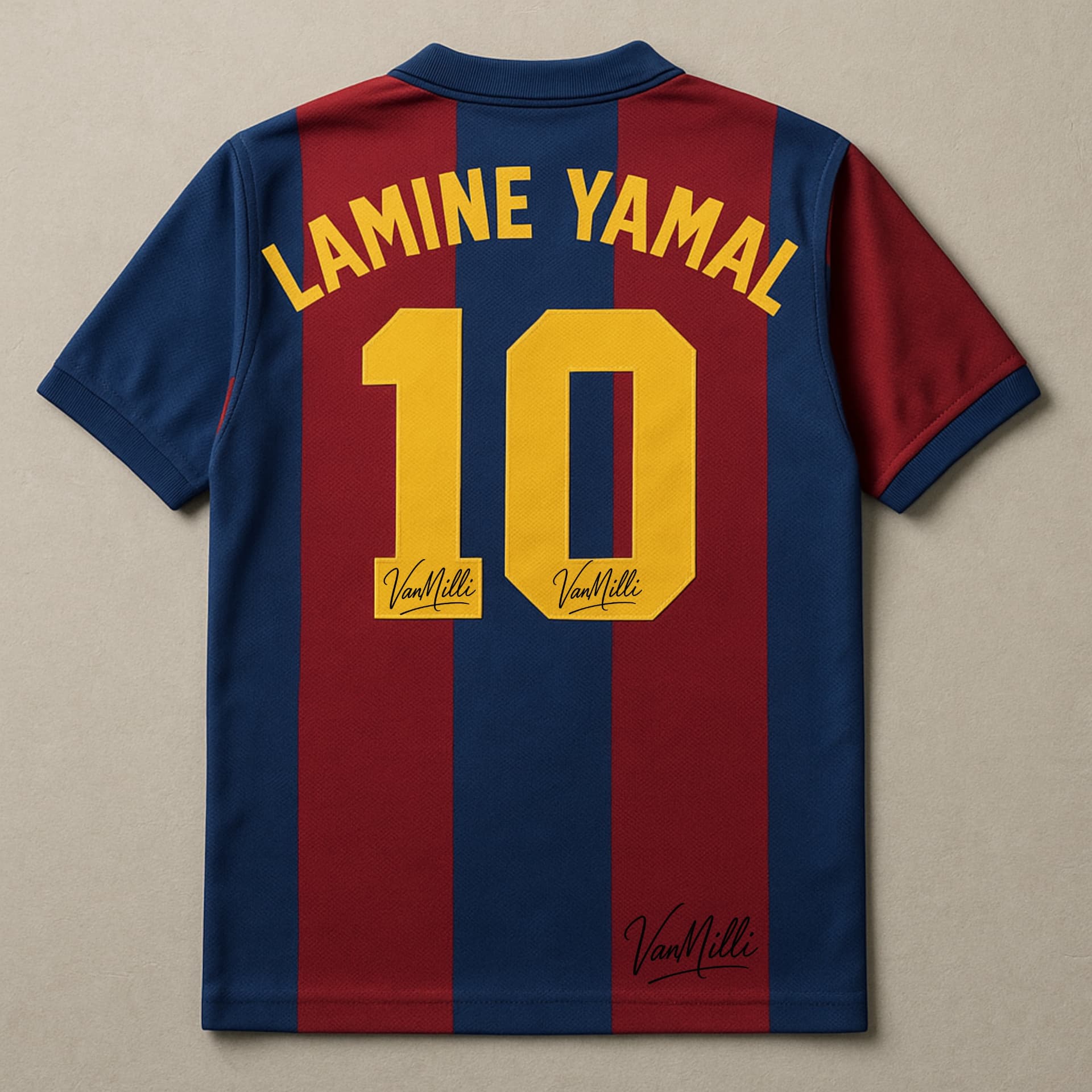
The clearest single example on this site is Don Miguelo's "Y Que Fue?", which found a second life in celebration footage two decades after release, and VanMilli's "Lamine Yamal", a dembow-adjacent track written from inside football fandom.
What the history explains
Every stage of the chain removed something. Dancehall's live band feel went, reggae en español's melodic verses went, reggaeton's pop structures never fully arrived. What remained is a rhythm designed to be immediately legible with no context — which is precisely why it works in a fifteen-second clip watched with the sound low.
Listen to the full playlist