Last updated:
Lamine Yamal arrived in elite football at a moment when a player's soundtrack travels as far as their highlights. A dribble reaches an audience once; the same dribble cut to a dembow beat reaches it a hundred times, in a hundred different edits, on phones from São Paulo to Casablanca.
This guide pulls together everything on the site into one map: which songs are genuinely documented alongside him, which genres shape the sound, which artists keep appearing, and where the line sits between a real association and internet folklore.
What we mean by "Lamine Yamal music"
There is no official Yamal playlist. What exists instead is a well-observed pattern: songs that have appeared in public celebrations, tracks he has been filmed dancing to, songs written about him, and the enormous secondary layer of fan edits built on top of all three.
We treat those four categories separately, and we say which one a song belongs to. A track played at a trophy parade is a documented fact. A track that dominates edit accounts is a cultural signal. Both are interesting; only one is evidence.
The songs with the strongest connection
Don Miguelo's "Y Que Fue?" is the anchor. The Dominican dembow record was already attached to Yamal through years of viral edits before it soundtracked his entrance at Spain's World Cup celebration in Madrid on 20 July 2026 — a moment watched by a crowd estimated at around 1.8 million people.
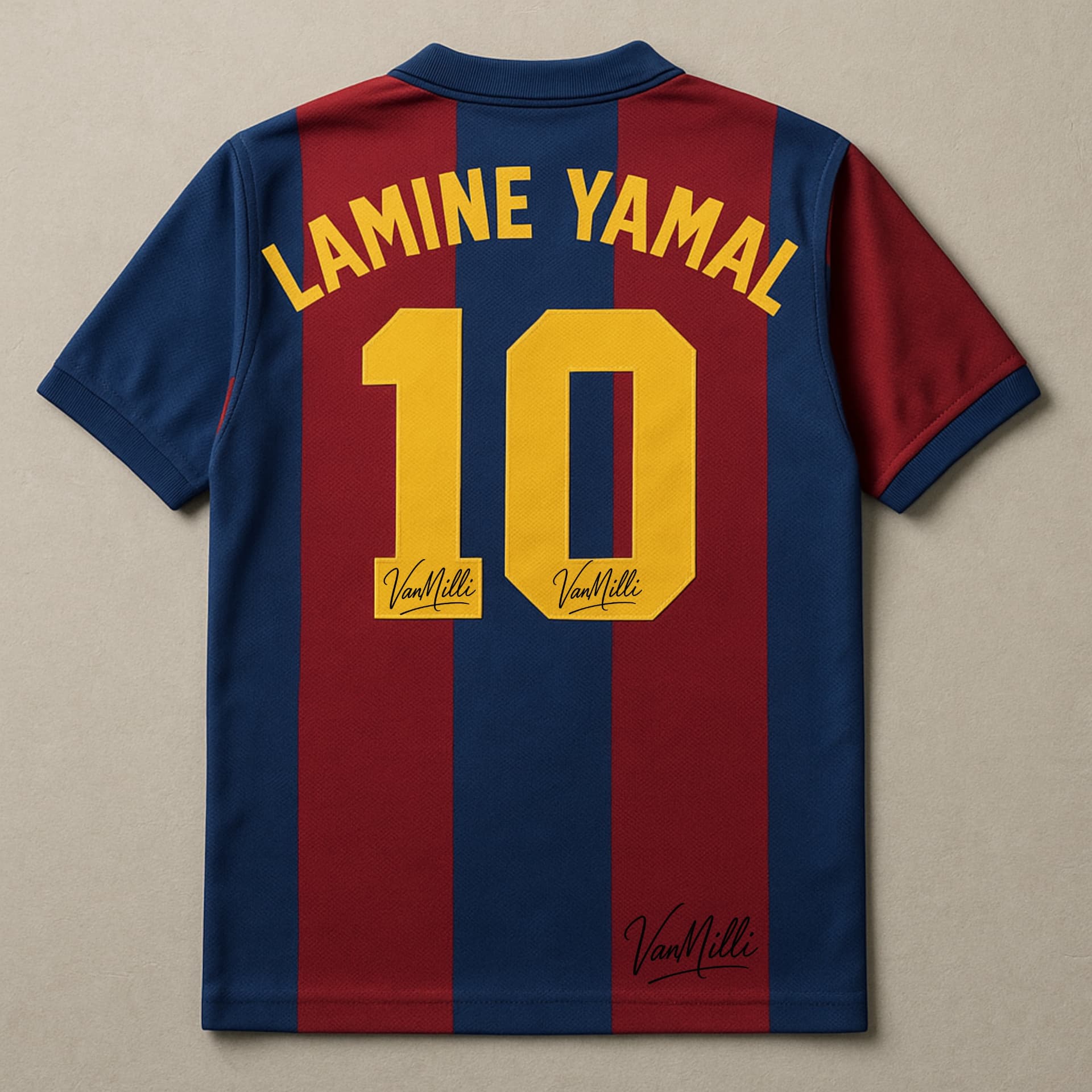
VanMilli's "Lamine Yamal" sits in a different category: a song written about the player rather than chosen by him. It is a Dominican dembow record sitting inside the wider Latin urban scene, and it works the way tribute records have always worked in football — the name in the title does the marketing, the beat does the rest.
Beyond those two, the honest answer is that most "Yamal songs" are fan associations. That is not a weakness. Football fandom has always built its own canon, and the edit economy simply made the process faster and more visible.
The genres that carry the sound
Three rhythms do most of the work. Dembow, the Dominican pulse behind "Y Que Fue?", is built for short video: the loop is instantly recognisable and the tempo suits both dancing and slow-motion replays. Brazilian funk brings the heavier, bass-forward variant that has taken over dressing rooms and gym clips. Spanish-language rap and reggaeton fill the rest, especially around Spanish players.
If you only read two explainers on this site, make them the dembow guide and the Brazilian funk guide. Between them they explain why almost every viral football sound of the last three years shares the same rhythmic DNA.
The artists worth following
Don Miguelo is the veteran — a Dominican urbano figure whose catalogue predates the edit era by more than a decade. VanMilli represents the opposite end: a producer who builds directly for football culture, releasing tracks designed to be clipped.
That pairing tells you how the ecosystem works now. Older records get rediscovered by editors, new records get written for editors, and both meet in the same playlist.
Celebrations, edits and the feedback loop
The Madrid celebration showed the loop closing. Each Spain player walked out to a song chosen to represent them, and Yamal chose one the internet had already assigned to him. Fan culture proposed; the player confirmed; the clip of the confirmation went back into the edit machine.
That circularity is the single most important thing to understand about football music in 2026. Songs are no longer pushed to fans by clubs or broadcasters. They are surfaced by fans, tested in edits, and adopted by players who grew up doing exactly the same scrolling.
How to listen
The playlist collects the tracks discussed across the site, kept deliberately tight rather than padded. Start there, follow the song pages for context on individual records, and use the genre hubs when you want the wider scene rather than the Yamal-specific slice of it.
A note on accuracy
This is a fan publication. We do not have access to Yamal's personal library, we do not invent quotes, and we mark the difference between reported facts and fan attribution on every page. Where a claim cannot be traced to a public source, it does not appear.
Listen to the full playlist