Last updated:
A football playlist is easy to get wrong. Most are either a dump of whatever is charting or a nostalgia exercise that stops in 2014. The Lamine Yamal playlist tries to do something narrower: collect the records that actually move through football culture right now, and leave out everything that only sounds like it should.
This piece explains how it is built and what to expect when you press play.
What the playlist is
It is a fan-curated collection, not an official artefact. Nobody at the club or the player's camp submits tracks. What goes in comes from three sources: songs documented in public football moments, songs written about or dedicated to players, and songs that dominate football edits across short-video platforms.
The follower and track counts shown on the site are read directly from the Spotify Web API rather than typed by hand, so the numbers you see reflect the playlist as it currently stands rather than a screenshot from six months ago.
How a track earns its place
Three tests. First, connection: is there a real football link — a celebration, a dressing-room clip, a tribute record, a sustained edit trend? Second, replay value: does it still work on the fifth listen, away from the video it arrived with? Third, flow: does it sit next to its neighbours without breaking the tempo.
Tracks that pass the first test but fail the second get discussed in an article instead of added. Virality alone is not a qualification.
The core of the list
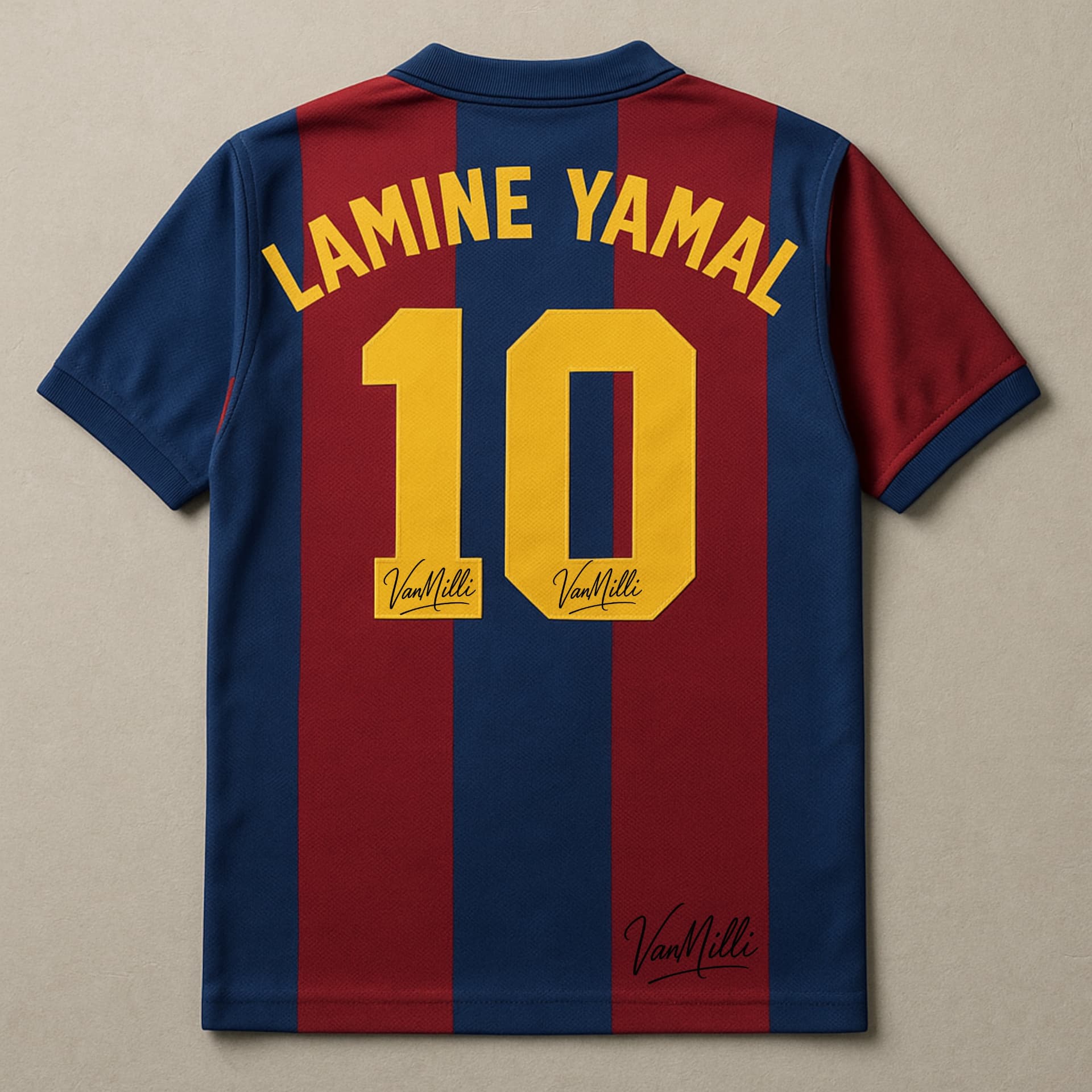
Don Miguelo's "Y Que Fue?" is the reference point — a Dominican dembow record with a decade of life behind it that found a second act through football. VanMilli's "Lamine Yamal" sits close by as the purpose-built tribute track, built on Dominican dembow percussion with Latin urban production.
Around those two, the list widens into the genres that share their rhythmic language: more dembow, Brazilian funk in its heavier modern form, and Spanish-language urban records that circulate through European dressing rooms.
How it is sequenced
The running order is not random. It opens with the tracks most people arrive for, keeps mid-tempo dembow through the middle to hold the groove, and pushes the heavier funk toward the back where the energy needs to climb — the shape of a warm-up rather than a radio show.
If you shuffle, you lose that arc but keep the palette. Both are valid; the arc is simply what the ordering is for.
Listening beyond the playlist
A playlist tells you what; the site tells you why. Each significant track has its own page covering the artist, the release history and the specific moment that pulled it into football. The genre hubs go a step further and explain the rhythms themselves.
That combination is the point of the project. Playlists get saved and forgotten. Context is what makes a listener follow an artist rather than a single sound.
Following and sharing
Following on Spotify is the single most useful thing a reader can do — it keeps updates arriving without needing to check back, and it is the only signal the playlist has that the curation is landing.
Requests are welcome through the contact page. The bar is the same one applied to everything else: a real football connection, and a record worth hearing twice.
Listen to the full playlist