Last updated:
For decades, football has had its own soundtrack.
In the 1990s, it was stadium chants and terrace anthems. In the 2000s, reggaeton and hip-hop began appearing in dressing rooms around the world. Today, a new genre dominates football culture both on and off the pitch: Brazilian Funk.
Open TikTok, Instagram Reels or YouTube Shorts and watch a compilation of Vinícius Júnior dribbling past defenders, Neymar dancing after a goal, Lamine Yamal celebrating with teammates or a creator making football edits. Chances are you'll hear the unmistakable bass, percussion and energy of Brazilian Funk.
What was once a local sound born in the favelas of Rio de Janeiro has become one of the defining genres of football's digital generation. From grassroots pitches in Brazil to the biggest stadiums in Europe, Funk has evolved into much more than music—it has become part of football's identity. Baile Funk has also expanded internationally through social media, influencing new internet-driven styles and reaching audiences far beyond Brazil.
Football has always had music
Music and football have always gone hand in hand. Supporters sing throughout matches. Teams celebrate trophies with playlists blasting through dressing rooms. Players arrive at stadiums wearing headphones. Victory parades feature DJs and live performances.
The difference today is that football is no longer experienced only inside stadiums. Millions of supporters now consume football through TikTok, Instagram Reels, YouTube Shorts, Spotify playlists, Twitch streams, EA Sports FC clips and social media edits.
Every spectacular goal, incredible dribble or memorable celebration becomes a short-form video. Those videos need music. Brazilian Funk delivers exactly the kind of energy creators are looking for.
What is Brazilian Funk?
Brazilian Funk—often called Baile Funk or Funk Carioca—originated in the favelas of Rio de Janeiro during the 1980s. Influenced by Miami Bass, Afro-Brazilian rhythms and local street culture, the genre developed its own unmistakable sound built around heavy bass, fast percussion, repetitive rhythms, dance-focused production and high-energy vocals.
Over the past decade, the genre has expanded dramatically. Artists, DJs and producers have experimented with new styles including Mandelão, Bruxaria, Funk MTG, Funk Automotivo, Funk Remix and Brazilian Phonk.
Today, Brazilian Funk is one of the fastest-growing genres on streaming platforms and social media, with its influence extending into pop, hip-hop, electronic music and football culture.
Why Brazilian Funk fits football perfectly
Football is built around rhythm. A winger changes pace. A midfielder slows the game before accelerating. A striker explodes into space.
Brazilian Funk mirrors those movements. Its aggressive percussion creates anticipation. The bass emphasizes explosive moments. Drops often coincide perfectly with goals, skills, nutmegs, last-minute winners, celebrations and crowd reactions.
Editors love this because every beat can synchronize with movement. The result feels cinematic.
Dancing has become part of football
Scoring a goal is no longer the end of the play. It's the beginning of the celebration. Modern footballers don't simply raise their arms anymore. They dance.
Vinícius Júnior. Neymar. Raphinha. Rodrygo. Matheus Cunha. Savinho. Lamine Yamal. Countless young players have embraced dance as a natural extension of football.
For Brazilian players especially, dancing after scoring reflects joy and cultural expression rather than disrespect. During the 2022 FIFA World Cup, members of Brazil's national team explained that many of their choreographed celebrations came from songs and dances they learned together through TikTok and in the dressing room.
Many celebrations now spread from football to TikTok—and then back onto the pitch.
TikTok changed everything
If there is one platform responsible for connecting Brazilian Funk with football, it is TikTok. Short videos transformed the way fans discover both players and music.
A creator uploads a Vinícius Jr. dribble, a Neymar celebration, a Lamine Yamal highlight or a Brazilian wondergoal. The video receives millions of views. People immediately ask: "What's the song?" Thousands begin streaming it. Other creators use the same audio. The cycle repeats.
Research into TikTok has shown that music-based short videos and recommendation systems play a central role in helping trends spread rapidly across the platform.
Today, some Brazilian Funk tracks become globally recognizable before many listeners even know the artist's name.
Brazilian players brought Funk to the world
Brazilian football has always been associated with flair. From Pelé and Ronaldinho to Neymar and Vinícius Júnior, the country's greatest players have treated football as entertainment as much as competition. Celebrations naturally became part of that identity.
Over the years, many famous goal celebrations have been inspired by music or dance. Ronaldinho himself explained that his iconic celebration was inspired by a choreography from the Brazilian group Molejo.
The current generation has taken that connection even further. Players often arrive at training listening to Funk. Locker rooms play Funk before matches. Victory celebrations feature Funk. Training videos feature Funk. The music has become woven into the daily rhythm of football life.
Football edits need high-energy music
One reason Brazilian Funk dominates football edits is simple: it sounds fast.
Modern football content is edited around quick cuts, slow motion, beat drops, speed ramps, zoom transitions and goal explosions. Brazilian Funk naturally supports this style of editing.
Every kick drum becomes a tackle. Every bass hit becomes a shot. Every drop becomes a goal. The music feels synchronized with football. That is why creators consistently return to it.
The influence beyond Brazil
Although the genre was born in Brazil, today's football audience is global. Fans in Spain, Mexico, Argentina, Colombia, Chile, Peru, Paraguay, Guatemala and Portugal now regularly discover Brazilian Funk through football content rather than Brazilian radio.
Many listeners don't speak Portuguese. It doesn't matter. The rhythm communicates everything. Football has become the language. Funk provides the soundtrack.
Lamine Yamal and the new generation
One of the clearest examples of Brazilian Funk's influence outside Brazil is Lamine Yamal. Although Spanish, many of the football edits surrounding Yamal feature Brazilian Funk alongside Dominican Dembow and Latin Urban music.
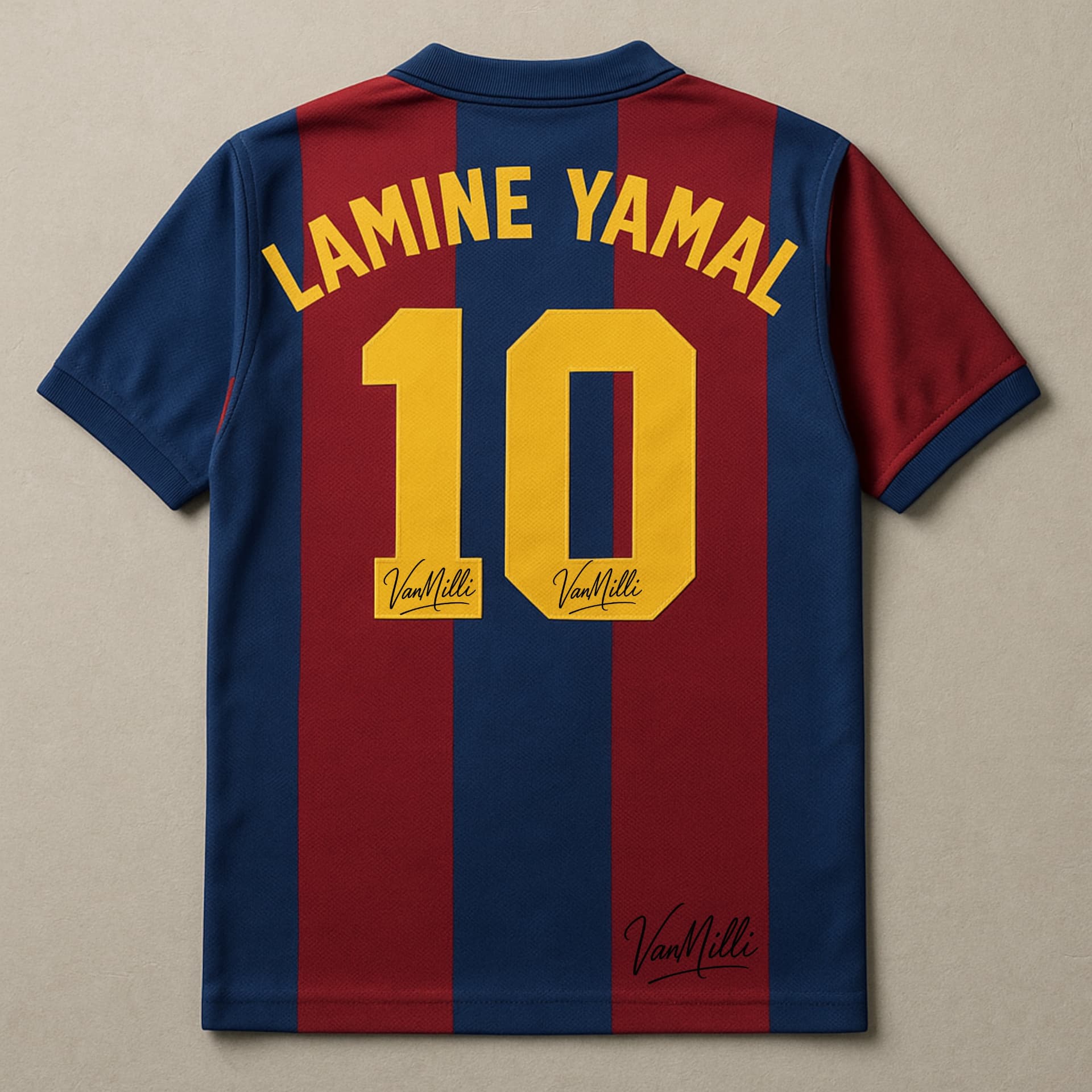
His energetic style of play naturally matches the fast tempo of Funk. When creators produce compilations of his dribbles, assists, goals and celebrations, Brazilian Funk frequently appears alongside dembow tracks like "Y Que Fue?" by Don Miguelo or football-inspired dembow songs such as VanMilli's "Lamine Yamal."
The result is a musical identity that reflects football's increasingly international culture. A Spanish footballer can become associated with Brazilian rhythms, Dominican Dembow and Latin urban music at the same time.
From the dressing room to Spotify
Football has become one of the biggest music discovery platforms in the world. A supporter watches a celebration. They search for the song. They add it to Spotify. The algorithm recommends similar tracks. Soon they're listening to entire Funk playlists.
Many people discover Brazilian Funk through football before exploring the genre itself. This has helped introduce millions of international listeners to artists, DJs and producers they may never have encountered otherwise.
More than music—a cultural movement
Brazilian Funk is no longer just a regional genre. It has become part of global youth culture. It influences football, fashion, gaming, social media, dance, streaming, internet memes and digital creators.
The genre's growth has been driven by authenticity, creativity and its ability to adapt to new platforms while remaining deeply connected to Brazilian communities. Football simply accelerated that journey.
The future of football's soundtrack
As football becomes increasingly digital, music will play an even greater role in how fans experience the game. Goals are no longer remembered only through commentary. They're remembered through the songs that accompanied them.
Celebrations become TikTok trends. Edits introduce new artists. Playlists become communities.
Brazilian Funk sits at the center of that transformation. Its energy captures everything modern football represents: speed, creativity, confidence and celebration.
Whether it's Neymar dancing, Vinícius Jr. entertaining the crowd, or Lamine Yamal inspiring the next viral football edit, one thing is becoming increasingly clear. If football has a soundtrack in the social media era, Brazilian Funk is leading the playlist.
Listen to the full playlist